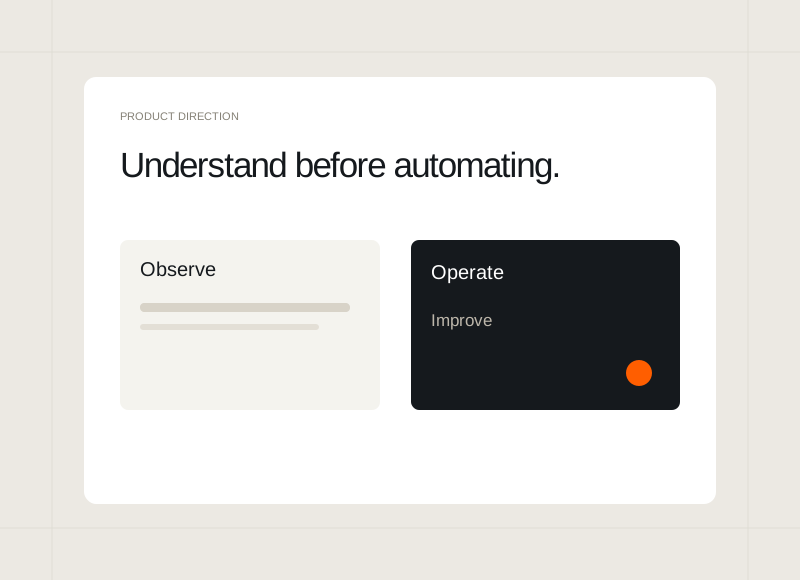
A new product does not need to automate every part of a service immediately. Some manual work can help a team understand exceptions and customer needs before committing to a system. The useful distinction is whether the temporary process supports learning and can be operated responsibly.
Map the whole task
Write down what happens before and after the visible interface. Include the people making decisions, the information they use, and the handovers between them. This often reveals that the difficult part is an unclear responsibility or missing detail rather than the absence of software.
Choose the temporary boundary
Be explicit about which steps a person will handle and which the product will support. Describe expected response times honestly within the experience. A manual step should not be disguised as an instant automated result, especially when someone is waiting for a meaningful confirmation.
Record the exceptions
Keep track of requests that do not fit the usual path. Notice where someone needs to ask a question, correct information, or make a judgement. Those observations can inform later design. Automating the standard path too early can leave the team with more difficult recovery work elsewhere.
Review what becomes repetitive
After operating the process, identify the stable steps that repeat and the decisions that still need human input. Use that distinction to shape the next build. The goal is a useful workflow with clear ownership, rather than automation added simply because it appears more complete.