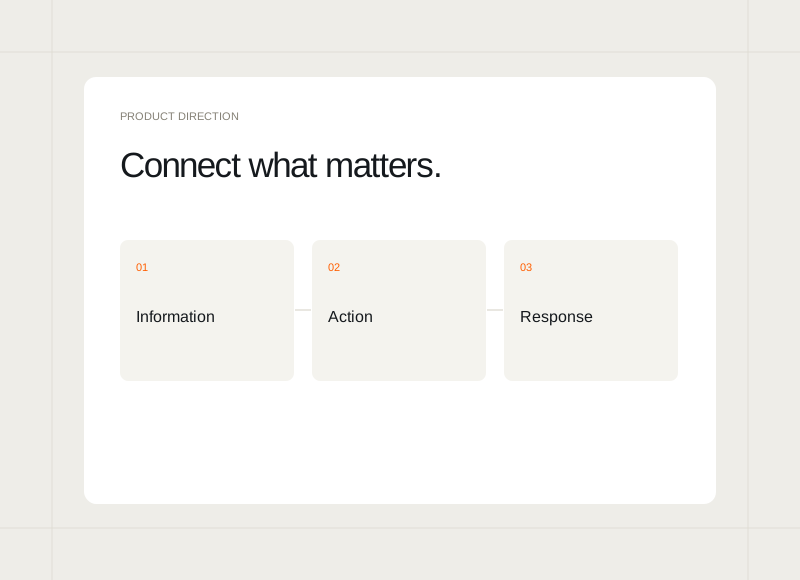
An integration can make a product more useful, but it also introduces another set of behaviours and dependencies. Start with the task that needs to work across systems. A recognisable provider name is not, by itself, a reason to include a connection in the first release.
Explain the information that must move
Describe what information is needed, where it comes from, and what should happen after it arrives. Include who owns it and which system should hold the current version. A concrete example is easier to review than a general request to connect two platforms.
Identify the moment it matters
Place the connection inside the user journey. Does it support an essential confirmation, save repeated entry, or make an internal handover possible? Understanding that moment helps the team decide whether the integration belongs in the first scope or can follow after the main experience is established.
Account for an unavailable response
Discuss what the person should see if the other system cannot respond or returns incomplete information. Decide how the team will notice and resolve the issue. These questions belong in the experience design, alongside the successful path, so someone is not left guessing whether their action worked.
Agree ownership after launch
Name who maintains the connection and who can investigate a problem. Include access and configuration responsibilities in the handover. The implementation details may change as systems evolve, but a clear operational owner helps the product remain understandable beyond its first demonstration.