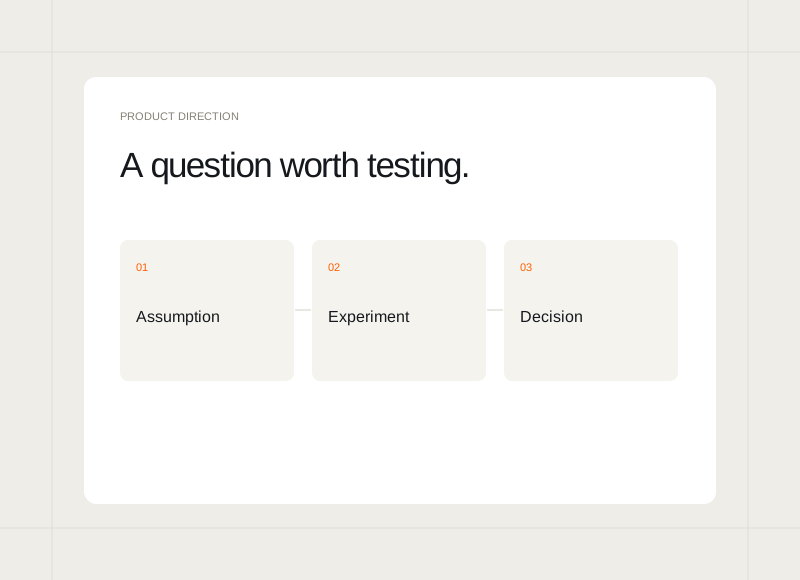
An idea usually contains several assumptions: that a problem matters, that someone wants help with it, and that your proposed approach makes sense. Building every screen at once can leave those questions hidden. A smaller experiment gives the next decision a clearer basis.
Name the uncertain part
Write the assumption as a statement someone could disagree with. “People need a better dashboard” is broad. “A studio owner needs one place to review open client requests each morning” is easier to discuss. Separate the observed problem from your preferred solution so the conversation can still change the idea.
Choose something people can respond to
A short interview, a paper journey, or a clickable prototype can each serve a different question. Show enough context for someone to understand the situation. Ask them to explain what they would do, rather than simply asking whether they like what they see.
Decide what would change your mind
Before collecting feedback, agree what kind of observation would lead you to revise the idea. A compliment is different from someone completing a task or describing a recurring difficulty. Keep the evidence tied to the original question instead of treating every positive comment as confirmation.
Carry the learning into scope
Summarise what you observed, what remains uncertain, and what the next version should explore. The experiment does not need to settle every decision. Its value is in making the next commitment more informed and keeping unresolved assumptions visible as the product takes shape.