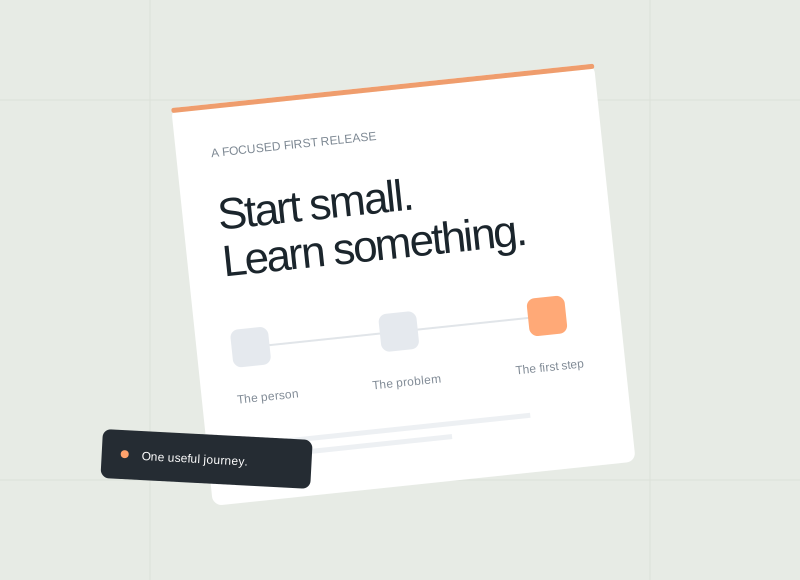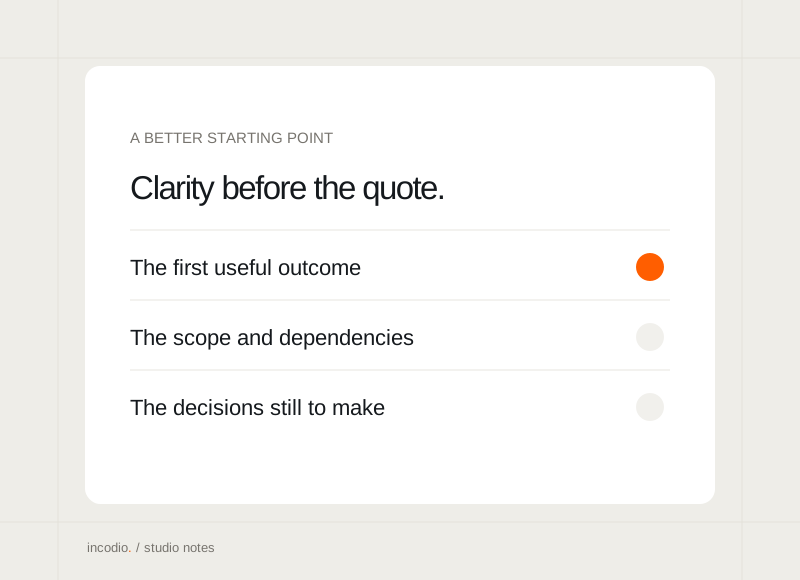
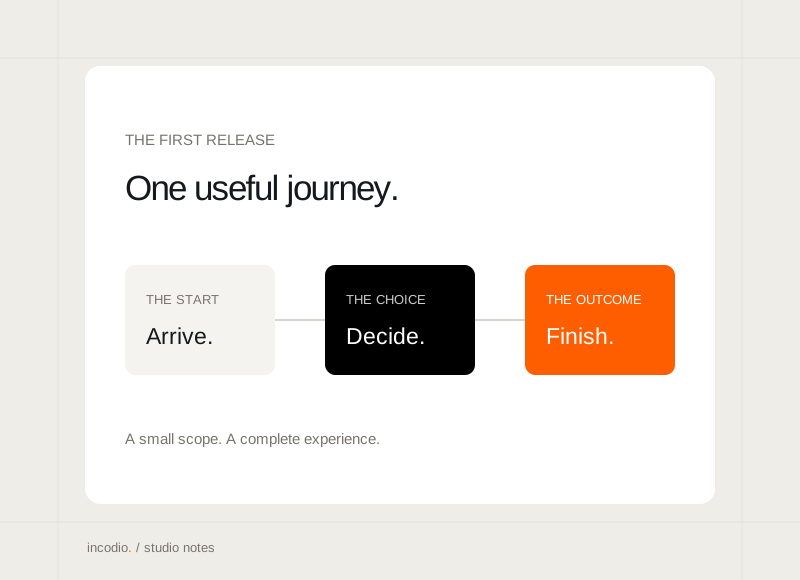
An early product can quickly become a collection of screens. A core journey gives those screens a purpose: helping one person get from a real need to a useful result. It is a practical starting point for deciding what the first version should contain.
Choose a person and a situation
Begin with a specific person in a specific moment. A business owner checking a customer request has different needs from a new visitor deciding whether to make one. Describe what brings that person to the product, what they already know, and what they are trying to accomplish. Keep the description concrete enough that someone else could recognise the situation.
Write the outcome before the screens
State what should be different when the journey ends. For a booking service, the useful outcome might be a confirmed appointment with clear next steps. A calendar screen alone is not that outcome. This distinction helps you account for confirmation, errors, and the information a person needs after the main action.
Map the smallest complete path
List the decisions and actions between the starting point and the outcome. Include the information the person supplies and the response they receive. Remove steps that do not help that journey. Keep essential recovery paths: an unavailable time, missing information, or a request that cannot be completed still needs a clear response.
Use the journey to discuss scope
Walk through the path with your team before estimating a collection of features. Ask what must work for the person to finish, what can be handled manually at first, and what depends on another system. Those decisions turn a broad idea into a scope that is easier to explain and review.
Review the whole experience
When a preview is ready, try the journey from the beginning with realistic information. Avoid judging each screen in isolation. Notice whether the language connects, whether previous choices carry forward, and whether the final state explains what happens next. Record the places where the experience breaks down and use them to guide the next revision.