A visitor arrives with a goal of their own. They may be comparing options, checking whether you solve their problem, or deciding whether a conversation is worth their time. Your page should help them make that decision.
Make the fit clear early
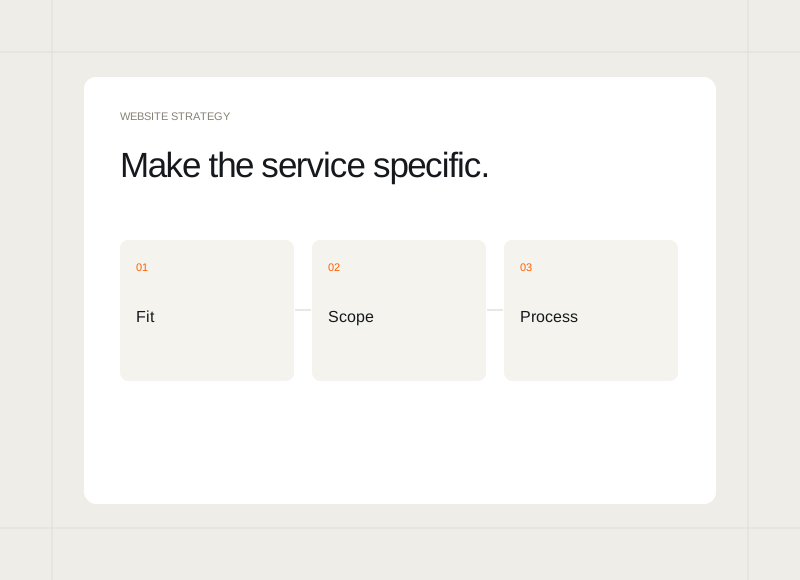
Start with who you help and the problem you help them solve. Give the visitor enough detail to recognise their situation. A short, specific introduction usually does more work than a broad statement that could describe almost any company.
Show the work behind the promise.
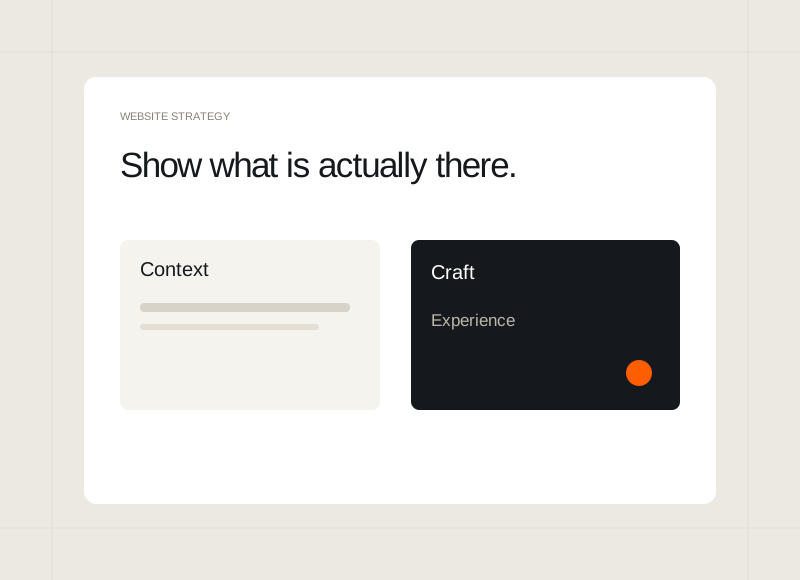
Use relevant examples, a working preview, or an explanation of how the service is delivered. Be explicit about what an example represents. A self-initiated concept can demonstrate design and development quality without being presented as a client engagement.
Explain what happens after the click
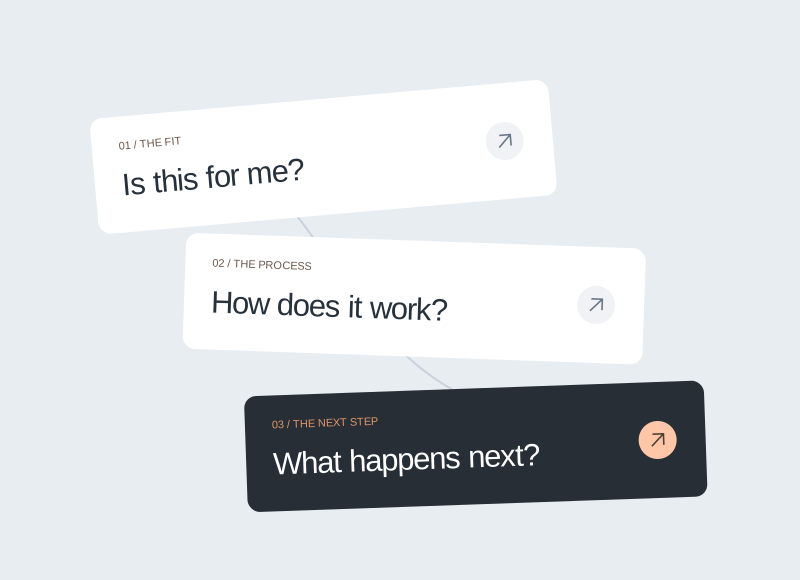
A call to action becomes easier to assess when the next step is clear. Tell people whether they are starting an inquiry, booking a meeting, or exploring an example. Keep the form focused on information that helps the conversation begin.
Put practical questions within reach
Scope, timing, collaboration, and handover are common sources of uncertainty. Address the questions that matter to your actual buyers. When an answer depends on the project, explain what it depends on and how it will be agreed.
Review the page as a journey
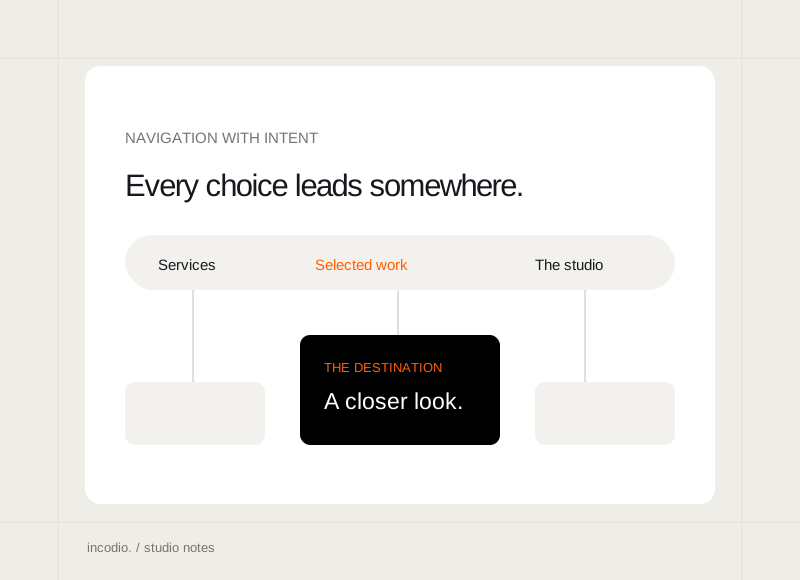
Read the page from top to bottom as a first-time visitor. Can you understand the offer, assess the fit, inspect something tangible, and find a useful next step? Remove repeated claims that add no information, and check that the same journey remains clear on a small screen.